
Freight pricing
The inputs that build a per skid number, and why there is no rate card.
See what changes a skid priceFreight guide
LTL vs FTL, LTL vs courier, and how LTL pricing works: those are the three questions shippers actually type. The short version is below. The longer version is the rest of this page.
LTL means less than truckload: pallet freight that does not fill a trailer, priced on the space and weight it uses rather than on a dedicated truck.
You have pallet freight, also called skids, that does not fill a trailer. Those skids travel with freight from other shippers. You are quoted and billed for the space and weight you use, not for a truck you did not fill.
KHLOELTL is a local LTL carrier. The work is business to business pallet freight in Toronto and the Greater Toronto Area.
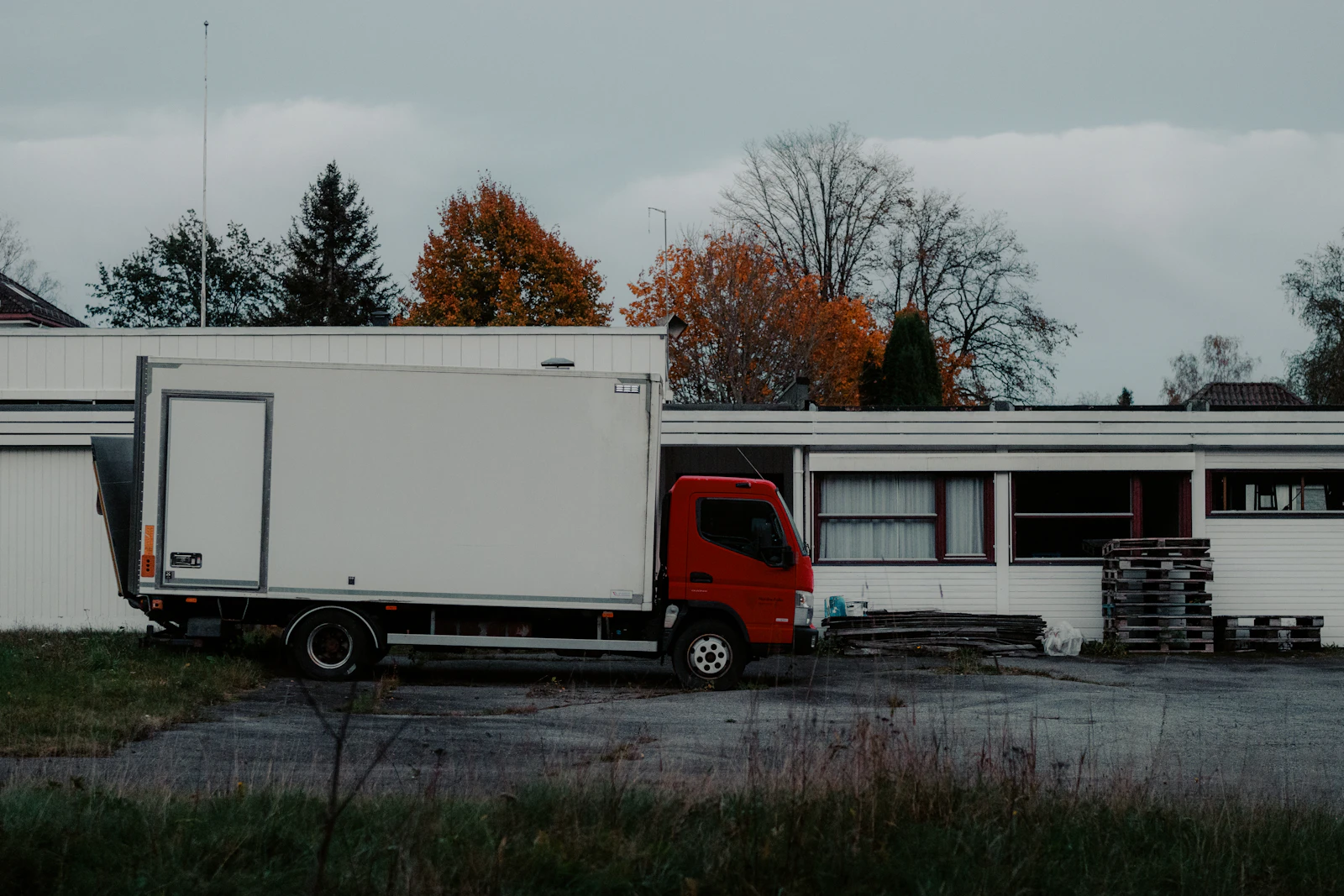
LTL is the right tool when the freight is palletized, when there are a few skids rather than a trailer full, and when both ends are businesses that can receive freight.
It is the wrong tool when you can fill a trailer, when the freight cannot share space with other shippers, or when the piece is small enough to go in a parcel network.
Skid is what a carrier calls the unit it moves: the pallet plus the goods on it, wrapped and labelled as one piece. Shippers usually say pallet and mean the same thing.
Freight travels well when it is built well. Stack the goods squarely on the pallet, keep the load inside the footprint of the base, wrap it so the load and the pallet move together, and put a label where a driver can read it without unwrapping anything.
A skid that leans, that overhangs the pallet edge, or that is wrapped so loosely that the top layer slides is the skid that arrives with an exception written on the paperwork.
FTL means full truckload. The trailer is yours. You pay for the truck whether you load twenty skids or two. Use FTL when you can fill it, or when the freight cannot share a trailer.
Use LTL when you have a few skids. Sharing the trailer is the point. The trade-off is that the truck is not dedicated to you, so pickup and delivery are planned around a route, not around a truck that sits at your dock.
A courier is built for parcels and envelopes. A driver can carry the piece. There is no pallet jack, no dock, and no tailgate.
A skid is freight. It is wrapped, labelled, and moved with a pallet jack or a forklift. If the receiving door is a warehouse dock, you want LTL, not a courier who will refuse the piece at the truck.
If you are unsure, describe the piece on the quote form: is it on a pallet, what does it weigh, and does the building have a dock.
KHLOELTL quotes per skid. That is the commercial model. The number still moves with weight, dimensions, density, the pickup and delivery docks, and extra work such as a tailgate.
There is no published rate card. A public average for shipping a pallet in Canada is not a quote for your docks. How a skid price is built walks through the inputs. Accessorial charges are the extra work on top of the linehaul.
Measure the skid as it will travel: length, width and height including the pallet base and any wrap or overhang. A skid that leans, or that has product hanging over the pallet edge, is measured at its widest point.
Density is the weight divided by the space the skid occupies. A trailer usually runs out of usable floor and cube before it runs out of legal payload, so a tall light skid can take as much of the truck as a much heavier one. That is why the quote asks for dimensions and not only for kilograms.
Stackable freight can take another skid on top of it without damage, which lets the trailer be loaded more efficiently. Say so on the quote when your skids genuinely stack.
Non stackable freight, whether from weight, fragility or an irregular shape, needs its own floor space. Confirm that honestly: freight marked stackable that cannot actually stack is a common cause of damage claims.
A raised loading dock puts the building floor level with the trailer floor, so the skid rolls on and off with a pallet jack. That is the standard LTL stop.
A site with no raised dock needs the truck's power liftgate, which the industry calls a tailgate. Ask for it on the quote. A tailgate requested at the door can delay the stop or come back as a redelivery. Tailgate delivery and accessorial charges covers the rest of the extra work.
Transit is confirmed on the quote for that pair of docks. This page does not publish a standard transit time.
The bill of lading is the contract of carriage the shipper signs at pickup. It describes the freight, the two docks and any extra work, and it travels with the load. Bill of lading vs waybill explains which document does what.
Proof of delivery is the signed record that the freight arrived and in what condition. Any exception, a short count or visible damage, belongs on that paperwork before anybody signs clean. If it turns into a shortage or damage file, start with how to file a freight claim.
Local GTA freight is its own kind of work. The distances are short, so the stops, the docks and the traffic decide the day more than the kilometres do. Industrial parks in Etobicoke, Mississauga, Brampton, Vaughan and Markham are built for trailers; a retail unit on a main street is not.
Hamilton is served as an additional area alongside the GTA cities. LTL Greater Toronto Area lists the municipalities and how a dock pair is confirmed.
Questions
Less than truckload (LTL) is pallet freight that does not fill a trailer. Your skids travel with freight from other shippers, and you are priced on the space and weight you use, not on a dedicated truck.
Full truckload (FTL) is the whole trailer for one shipper. You pay for the truck whether you fill it or not. LTL is the right tool when you have a few skids, not a full trailer.
A courier is built for parcels and envelopes. A skid on a pallet jack, a dock, and a tailgate are freight work. If it sits on a pallet, it is an LTL shipment, not a courier parcel.
KHLOELTL quotes per skid. The number still moves with weight, dimensions, the two docks, and extra work such as a tailgate. There is no published rate card. Use the quote form.
Send the two docks, the skid count, the weights and the dimensions. Dispatch prices the movement you actually have.